











Published: March 2026
Reading time: 5 minutes
Suitable for: Employers, Managers, Supervisors and Employees
Topics: Health & Safety | Legal Responsibilities | Safety Culture | Employee Engagement
At a glance
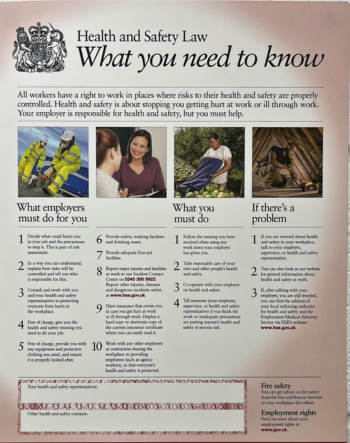
Health and safety is everyone’s responsibility.
Employers should:
- Provide safe workplaces
- Assess risks
- Deliver training
- Supply suitable equipment
- Monitor and improve safety
Employees should:
- Follow procedures
- Work safely
- Report hazards
- Use equipment correctly
- Look after themselves and others
Why this matters
Health and safety is often thought of as something that belongs to managers, supervisors or dedicated health and safety professionals.
In reality, creating a safe workplace is a shared responsibility.
Employers have legal duties to protect the people who work for them, but employees also have an important role in following safe systems of work, looking after themselves and considering how their actions affect others.
When everyone understands their responsibilities, workplaces become safer, healthier and more productive.
Employers set the foundations
Every employer has a duty to provide a safe working environment.
This includes:
- Identifying workplace hazards
- Assessing risks
- Providing suitable information, instruction and training
- Supplying appropriate equipment
- Maintaining safe workplaces
- Consulting with employees on health and safety matters
- Monitoring and reviewing safety arrangements
Good employers don’t simply react to incidents—they work to prevent them.
Employees make safety work
Even the best health and safety systems rely on employees putting them into practice.
Employees should:
- Follow training and workplace procedures
- Use equipment correctly
- Wear PPE where required
- Report hazards, defects and near misses
- Cooperate with their employer
- Avoid putting themselves or others at unnecessary risk
Small actions carried out consistently help prevent accidents and injuries.
Safety is a partnership
Imagine an employer provides high-quality PPE, delivers excellent training and develops clear risk assessments.
If employees ignore the procedures, the risks remain.
Likewise, employees cannot work safely if suitable equipment, training or supervision haven’t been provided.
Health and safety works best when everyone plays their part.
Communication is key
Many workplace incidents occur because information isn’t shared.
Encouraging employees to ask questions, report concerns and suggest improvements helps create a stronger safety culture.
Good communication allows organisations to identify issues before they lead to accidents.
Everyone can make a difference
You don’t need to be a manager to improve health and safety.
Simple actions can have a significant impact, such as:
- Reporting a damaged piece of equipment
- Cleaning up a spill before someone slips
- Reminding a colleague about PPE
- Suggesting a safer way to complete a task
- Speaking up if something doesn’t seem right
Safety is built through these everyday decisions.
What does the law say?
The Health and Safety at Work etc. Act 1974 places duties on both employers and employees.
Employers must, so far as is reasonably practicable, protect the health, safety and welfare of their employees and others who may be affected by their work.
Employees must take reasonable care of their own health and safety, as well as that of others who may be affected by what they do. They must also cooperate with their employer so legal duties can be met.
Related resources
Documents
E-learning
Need more help?
Understanding who is responsible for health and safety is one of the foundations of a safe workplace.
The Health & Safety Portal provides practical guidance, downloadable resources and e-learning to help employers and employees understand their responsibilities and work together to create safer working environments.