










Published: February 2024
Reading time: 5 minutes
Suitable for: Business Owners, Directors, Managers, Supervisors and Employees
Topics: Hazard Reporting | Near Misses | Incident Reporting | Risk Assessment
At a glance
Main goal: Identify hazards before they cause harm.
Who should be involved? Everyone in the workplace.
Key action: Encourage employees to report hazards, near misses and incidents as soon as they occur.
Benefits: Fewer accidents, improved compliance and a stronger safety culture.
Why this matters
Every workplace has hazards, but not every hazard leads to an accident.
Many serious incidents are preceded by warning signs, such as unsafe conditions, unsafe behaviours or near misses that were never reported. By recognising and acting on these early warning signs, businesses can prevent injuries, reduce disruption and create a safer working environment.
Developing a culture where hazards and near misses are reported is one of the most effective ways to improve workplace safety.
What are hazards, near misses and incidents?
Although these terms are often used together, they each have a different meaning.
Hazard
A hazard is anything that has the potential to cause harm.
Examples include:
- Wet floors
- Damaged electrical equipment
- Poorly stored materials
- Unprotected machinery
- Excessive noise
Hazards should be identified and controlled before they cause harm.
Near Miss
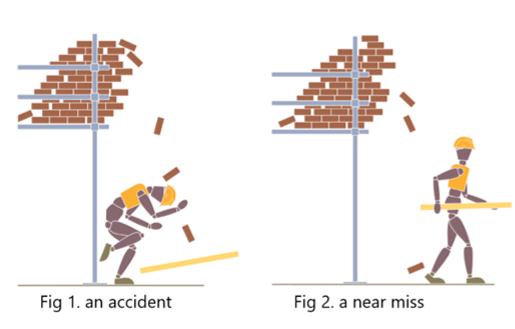
A near miss is an unplanned event that could have caused injury, ill health or damage but fortunately did not.
For example:
- A box falls from a shelf but misses an employee.
- Someone slips on a wet floor but regains their balance.
- A vehicle narrowly avoids striking a pedestrian.
Near misses provide valuable learning opportunities and should always be reported and investigated.
Incident
An incident is an event that results in injury, ill health, damage to property or environmental harm.
Some workplace incidents must be reported to the Health and Safety Executive (HSE) under the Reporting of Injuries, Diseases and Dangerous Occurrences Regulations (RIDDOR).
Why is reporting important?
Reporting hazards, near misses and incidents helps businesses identify problems before they become serious.
By investigating what happened, you can:
- Identify unsafe conditions
- Recognise unsafe behaviours
- Prevent similar incidents happening again
- Improve existing control measures
- Reduce injuries and disruption
- Demonstrate a positive safety culture
Encouraging employees to report concerns without fear of blame helps create an environment where safety becomes everyone’s responsibility.
What should employers do?
Employers should have clear procedures for identifying, reporting and investigating workplace issues.
Good practice includes:
- Encouraging employees to report hazards and near misses
- Investigating incidents promptly
- Completing suitable and sufficient risk assessments
- Reviewing trends to identify recurring issues
- Taking corrective action to prevent recurrence
- Sharing lessons learned with employees
- Keeping accurate records where appropriate
What should employees do?
Employees also have an important role in keeping the workplace safe.
They should:
- Report hazards as soon as they are identified
- Report all near misses, even if nobody was injured
- Report accidents and incidents immediately
- Follow safe systems of work
- Cooperate with investigations
- Suggest improvements where risks are identified
Did you know?
According to the Labour Force Survey, an estimated 561,000 workers sustained a non-fatal injury at work during 2022/23, while 60,645 workplace injuries were reported to the HSE under RIDDOR during the same period.
Many of these incidents could potentially have been prevented through effective risk management and early reporting of hazards and near misses.
How can risk assessments help?
Risk assessments are one of the most effective ways to prevent incidents before they occur.
They help you to:
- Identify workplace hazards
- Assess who may be harmed
- Decide what control measures are needed
- Record significant findings
- Review risks when circumstances change
Combined with effective reporting procedures, risk assessments form the foundation of a proactive health and safety management system.
What does the law say?
Under the Health and Safety at Work etc. Act 1974, employers have a duty to protect the health, safety and welfare of employees and others affected by their work activities.
The Management of Health and Safety at Work Regulations 1999 require employers to assess workplace risks and implement suitable control measures.
Certain serious workplace incidents must also be reported under RIDDOR, helping the HSE monitor workplace safety and identify trends across industries.
Related resources
Documents
- Hazard Identification and Risk Reporting Policy
- Near Miss Report Form
- Incident Investigation Procedure
- Hazard Observation Form
E-learning
Need more help?
Creating a safe workplace starts with recognising hazards before they lead to accidents. Our Health & Safety Portal provides practical tools to help you manage this process, including risk assessment templates, hazard reporting forms, incident reporting procedures, and e-learning courses designed to build confidence and improve awareness across your workforce.
By encouraging employees to report hazards and near misses, and by acting on the information they provide, you can strengthen your safety culture, reduce the likelihood of future incidents and create a safer workplace for everyone.