











Published: September 2024
Reading time: 6 minutes
Suitable for: Business Owners, Directors, Managers, Supervisors and Employees
Topics: Competency | Training | Health & Safety Management | Legal Responsibilities
At a glance
Main goal: Ensure employees have the competence to work safely.
Competency includes: Skills, knowledge, experience and attitude.
Who is responsible? Both employers and employees.
Key action: Develop competence through training, supervision and practical experience.
Why this matters
Providing employees with health and safety training is an important part of managing workplace risks—but training alone does not make someone competent.
Competency is about ensuring people have the skills, knowledge, experience and attitude needed to carry out their work safely. Without competent employees, even the best policies and procedures may not prevent accidents.
Developing competence throughout your organisation helps protect employees, supports legal compliance and creates a safer, more confident workforce.
What is health and safety competency?
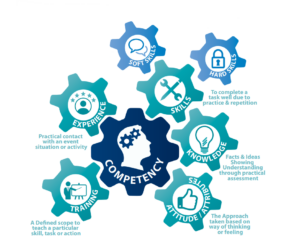
The Health and Safety Executive (HSE) defines competence as having the appropriate combination of:
- Skills
- Knowledge
- Experience
- Attitude
These four elements work together to ensure someone can carry out their work safely and effectively.
Competency is not something that is achieved once—it should be developed and maintained throughout an employee’s career.
The four elements of competency
Skills
Employees should have the practical ability to complete their work safely.
This may include:
- Operating equipment correctly
- Using personal protective equipment (PPE)
- Following safe systems of work
- Carrying out manual handling safely
- Responding appropriately in an emergency
Practical skills are developed through both training and supervised experience.
Knowledge
Employees need to understand the hazards associated with their work and how those risks are controlled.
This includes understanding:
- Workplace hazards.
- Risk assessments.
- Company policies and procedures.
- Emergency arrangements.
- Relevant health and safety legislation.
Knowledge helps employees make informed decisions when carrying out their work.
Experience
Experience allows employees to apply their knowledge in real workplace situations.
Over time, experience helps people:
- Recognise developing hazards.
- Make safer decisions.
- Respond effectively to unexpected situations.
- Support less experienced colleagues.
New employees may require additional supervision while they build experience.
Attitude
A positive attitude towards health and safety is just as important as technical knowledge.
Competent employees:
- Follow procedures.
- Report hazards.
- Ask questions when unsure.
- Look out for colleagues.
- Take responsibility for their own safety.
A strong safety culture depends on everyone recognising that health and safety is part of their everyday role.
Why is training important?
Training provides the foundation for developing competence, but it is only one part of the process.
Employers should ensure that employees receive:
- Suitable induction training
- Job-specific training
- Refresher training where appropriate
- Information about changes to procedures or equipment
Training records should also be maintained so that competence can be reviewed and demonstrated when required.
What are employers responsible for?
Employers have a legal duty to ensure employees receive appropriate information, instruction, training and supervision.
This includes:
- Identifying training needs
- Providing suitable training
- Monitoring employee competence
- Providing supervision where required
- Reviewing competency as roles and responsibilities change
Competence should be viewed as an ongoing process rather than a one-off event.
What are employees responsible for?
Employees also have legal responsibilities.
They should:
- Follow health and safety procedures
- Apply the training they have received
- Use equipment correctly
- Report hazards and unsafe conditions
- Ask for guidance if they are unsure how to carry out a task safely
Competency relies on employees putting their knowledge into practice every day.
What happens after an incident?
If a workplace accident occurs, investigators may examine whether everyone involved was competent to carry out their role safely.
This could include reviewing:
- Training records.
- Risk assessments.
- Safe systems of work.
- Levels of supervision.
- Employee actions.
- Whether procedures were followed.
Maintaining clear records of training and competency helps demonstrate that appropriate arrangements were in place.
What does the law say?
The Management of Health and Safety at Work Regulations 1999 require employers to appoint one or more competent persons to help them comply with their health and safety duties.
A competent person is someone who has the appropriate combination of skills, knowledge, experience and personal qualities to provide sensible health and safety advice and support.
For many small businesses, this does not necessarily mean employing a dedicated health and safety professional. Business owners or managers can often fulfil this role themselves, provided they have developed the necessary competence through suitable training, practical experience and an understanding of the risks within their business.
Where additional expertise is needed, employers may choose to seek support from an external health and safety adviser or consultant.
Employees also have legal responsibilities to take reasonable care of their own health and safety, cooperate with their employer and follow the training and procedures provided.
Related resources
E-Learning
Need more help?
Developing competent employees is one of the most effective ways to reduce workplace risks and build a positive safety culture. The Health & Safety Portal provides practical resources to support competency across your organisation, including e-learning courses, training records, policy templates, risk assessments and toolbox talks.
By combining training with practical experience, supervision and ongoing development, you can help ensure your employees have the confidence and competence to work safely every day.