











RIDDOR Reporting Guidelines Update
Published: August 2024
Reading time: 3 minutes
Suitable for: Employers, Managers and Anyone Responsible for Incident Reporting
Topics: RIDDOR | Legal Update | Incident Reporting | Compliance
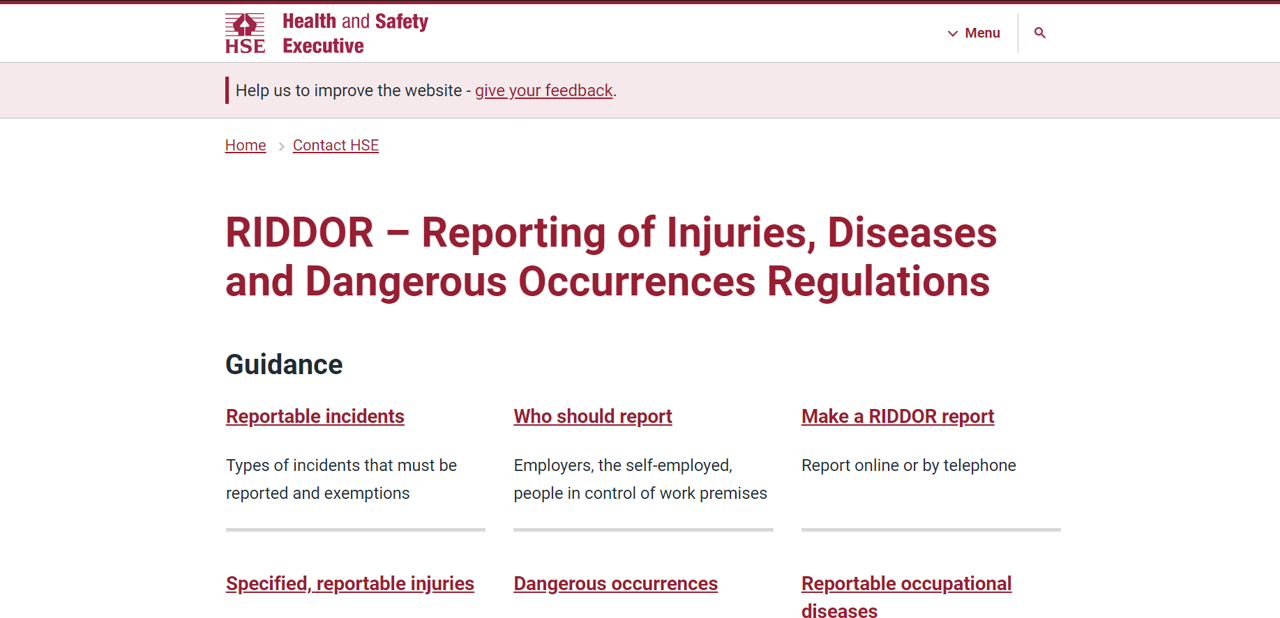
We want to inform you about the latest updates from the Health and Safety Executive (HSE) regarding the Reporting of Injuries, Diseases, and Dangerous Occurrences Regulations (RIDDOR). These updates are intended to streamline the reporting process and make it more straightforward, while the core legal requirements remain unchanged.
What’s changed?
The Health and Safety Executive (HSE) has updated its guidance and online reporting forms for the Reporting of Injuries, Diseases and Dangerous Occurrences Regulations (RIDDOR).
The legal requirements have not changed, but the guidance and reporting process have been improved to make it easier to understand:
- when an incident must be reported;
- who is responsible for reporting;
- how to complete the online forms correctly.
If your organisation is responsible for reporting workplace incidents, it’s worth taking a few minutes to familiarise yourself with these updates.
Updates to the guidance
The HSE has made several improvements to its published guidance, including:
Easier access to information
Direct links have been added to help users quickly determine whether an incident is reportable under RIDDOR.
Clearer reporting responsibilities
The guidance now explains more clearly who is responsible for submitting a RIDDOR report and when reporting is not required.
Better explanation of work-related accidents
Additional guidance has been included to help employers determine whether an accident is considered work-related.
Improved occupational disease guidance
The updated guidance provides greater clarity about which occupational diseases must be reported and which do not.
Over-7-day absence reporting
The HSE has also clarified when injuries resulting in more than seven consecutive days away from work should be reported.
Updates to the reporting forms
The online reporting forms have also been improved to make the reporting process simpler.
Changes include:
- Questions about injury severity now appear at the beginning of the form to help determine whether reporting is required
- New pop-up messages direct users away from the reporting process if the incident is not reportable
- Additional guidance has been added throughout the forms to improve usability
What should employers do?
If you or someone in your organisation is responsible for health and safety, now is a good opportunity to:
- Review the updated HSE guidance
- Familiarise yourself with the revised reporting forms
- Check that your incident reporting procedures remain up to date
- Ensure managers understand when RIDDOR reporting is required
- Share this update with anyone responsible for incident reporting
Although the legal requirements have not changed, understanding the revised guidance will help ensure incidents are reported correctly.
Need more help?
Keeping up to date with changes to health and safety guidance helps ensure your organisation remains compliant and continues to manage workplace incidents effectively.
If you’re unsure how these updates affect your business, Harwood can help you review your incident reporting procedures and ensure your managers understand when and how incidents should be reported.