












Published: July 2026
Reading Time: 5–7 minutes
Suitable for: Employers, Managers and Employees
Topics: Weather Safety, Occupational Health, Risk Assessment, Emergency Planning
At a glance
Remember these key points:
-
A Red Weather Warning indicates dangerous weather with a potential risk to life.
-
Businesses do not automatically have to close, but work should be reviewed carefully.
-
Consider whether work can be postponed, relocated or carried out differently.
-
Extreme heat can increase the risk of dehydration, heat illness and accidents.
-
Good planning and communication help keep employees safe during severe weather.
Why this matters
The UK has experienced several periods of exceptionally hot weather in recent years, with the Met Office issuing Red Weather Warnings for extreme heat in some parts of the country. While many people associate these warnings with travel disruption or public health advice, they also have important implications for workplaces.
Employers have a legal duty to protect the health, safety and welfare of their employees. When severe weather creates additional risks, businesses should consider whether existing control measures remain suitable and whether temporary changes are needed to keep people safe.
 What is a Red Weather Warning?
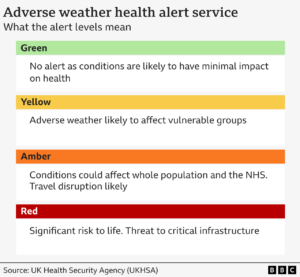
The Met Office uses three levels of weather warning:
- Yellow – Be aware. Severe weather is possible and may cause some disruption.
- Amber – Be prepared. Severe weather is more likely and could significantly affect travel, infrastructure and normal activities.
- Red – Take action. Dangerous weather is expected, and there is a high likelihood of widespread disruption and a risk to life.
A Red Warning is issued only when severe weather is expected to have a significant impact on people and communities. It doesn’t automatically mean businesses must close, but it should prompt employers to carefully review whether work can continue safely.
What should employers do?
A Red Weather Warning should trigger a review of your planned work activities.
Ask yourself:
- Does this work still need to be carried out today?
- Can the work be postponed?
- Can employees work from home?
- Are additional control measures required?
- Are vulnerable employees at greater risk?
- Is travel necessary?
Employers should make decisions based on the specific risks their employees face rather than applying a one-size-fits-all approach.
During periods of extreme heat
High temperatures can increase the risk of:
- Heat exhaustion
- Heatstroke
- Dehydration
- Fatigue
- Reduced concentration
- Sunburn
- Increased likelihood of mistakes and accidents
Outdoor workers and those working in hot indoor environments are particularly vulnerable.
Employers should consider:
- Rescheduling physically demanding work to cooler parts of the day
- Providing frequent rest breaks
- Ensuring drinking water is readily available
- Providing shaded rest areas where possible
- Encouraging suitable lightweight clothing where PPE requirements allow
- Monitoring employees for signs of heat-related illness
- Checking on lone workers more frequently
If work cannot be carried out safely, it may need to be postponed.
Severe weather isn’t just about heat
Red Weather Warnings can also be issued for:
- Strong winds
- Heavy rain
- Snow and ice
- Storms
Each presents different risks, including:
- Falling objects
- Flooding
- Slips and falls
- Reduced visibility
- Unsafe travel
- Power failures
- Structural damage
Employers should always consider how the specific weather conditions could affect their employees, customers and members of the public.
Communication is essential
When severe weather is forecast, employees should know:
- Whether work arrangements have changed
- Whether they should travel
- Who to contact if conditions worsen
- What emergency procedures are in place
- How to report concerns
Clear communication helps reduce uncertainty and ensures everyone understands the precautions being taken.
What does the law say?
There is no specific UK law requiring businesses to close during a Red Weather Warning.
However, employers remain subject to their duties under:
- Health and Safety at Work etc. Act 1974
- Management of Health and Safety at Work Regulations 1999
These require employers to assess workplace risks and take reasonably practicable steps to protect employees from harm.
Where severe weather significantly increases workplace risks, employers should review their arrangements and implement additional control measures where necessary.
Related resources
Documents
E-learning
Need more help?
Your Harwood Health & Safety Portal contains practical guidance to help you prepare for severe weather throughout the year. We recommend exploring the related policies, e-learning courses and toolbox talks listed above to ensure your business is ready to respond to changing weather conditions safely and effectively.
Remember, severe weather doesn’t remove your health and safety responsibilities—but with good planning and the right resources, you can adapt your working practices to protect your employees while maintaining business continuity.