












Published: December 2025
Reading time: 6 minutes
Suitable for: Employers, Managers, Supervisors and Employees
Topics: Safety Culture | Continuous Improvement | Employee Engagement | Leadership
At a glance
A positive safety culture encourages organisations to:
- Recognise good practice.
- Learn from incidents and near misses.
- Encourage employee involvement.
- Celebrate improvements.
- Continuously review and improve safety arrangements.
Remember:
Safety isn’t built through one big achievement. It’s created through hundreds of small actions, repeated every day by people who care about keeping themselves and others safe.
Why this matters
When something goes wrong in the workplace, it’s natural to investigate.
We ask:
- What happened?
- Why did it happen?
- How can we stop it happening again?
These are important questions and an essential part of incident investigation, but they only tell part of the story.
Every day, employees make safe decisions, report hazards, suggest improvements and look out for one another. These actions often prevent incidents before they occur, yet they can easily go unnoticed.
As the year draws to a close, it’s worth taking a moment to recognise the progress your organisation has made and the people who have helped create a safer workplace.
Safety is more than the absence of accidents
A year without a serious accident is certainly something to celebrate, but good health and safety is about much more than statistics.
Strong safety cultures are built through hundreds of positive decisions every day, including:
- Reporting hazards before someone is injured.
- Sharing ideas to improve safety.
- Following safe systems of work.
- Keeping work areas clean and organised.
- Looking out for colleagues.
- Completing inspections thoroughly.
- Taking part in training and asking questions.
These everyday actions are what prevent accidents from happening in the first place.
Celebrating good practice
Recognising positive behaviour encourages people to continue making safe choices.
Recognition doesn’t need to involve trophies or expensive reward schemes. Often, the most meaningful recognition is simply acknowledging someone’s contribution.
This could include:
- Thanking an employee who identified a hazard.
- Highlighting good practice during a team meeting.
- Sharing success stories in company newsletters.
- Recognising employees who suggest practical improvements.
- Celebrating teams that consistently demonstrate safe working practices.
Creating a culture where positive behaviour is noticed helps reinforce that safety is everyone’s responsibility.
What does good safety look like?
Improving health and safety doesn’t always require major investment. Many of the most effective improvements are simple, practical changes that make work safer and more efficient.
Improving housekeeping
- Introducing shadow boards so tools are always returned to the correct place
- Creating designated storage areas
- Clearly marking pedestrian walkways and vehicle routes
Benefit: Reduced slips, trips and falls, along with a cleaner and more organised workplace.
Acting on employee suggestions
An employee notices that deliveries regularly block a fire exit.
Instead of accepting it as “just the way things are”, the business redesigns the delivery area to keep the escape route clear.
Benefit: Improved emergency access and safer traffic management.
Investing in safer equipment
Examples include:
- Introducing lifting aids
- Replacing manual equipment with mechanical alternatives
- Installing height-adjustable workstations
- Upgrading worn or outdated machinery
Benefit: Reduced physical strain, fewer injuries and improved productivity.
Learning from near misses
A member of staff reports almost slipping on a wet entrance floor.
Rather than waiting for someone to be injured, the business installs improved entrance matting and reviews its cleaning arrangements during wet weather.
Benefit: Preventing accidents before they happen.
Improving training
Following a review, a company introduces monthly Toolbox Talks to reinforce key safety messages throughout the year.
Benefit: Keeping health and safety fresh in everyone’s mind instead of relying solely on annual refresher training.
Reviewing risk assessments
A business introduces new equipment and updates its risk assessments to reflect the changes before work begins.
Additional training is provided where required.
Benefit: Ensuring safety controls remain suitable as the business evolves.
Supporting employee wellbeing
Examples include:
- Encouraging regular breaks
- Providing mental health support
- Identifying fatigue as a workplace risk
- Promoting a healthy work-life balance
Benefit: Healthier employees who are better able to work safely and effectively.
Recognising positive behaviour
An employee spots a damaged electrical cable and reports it before anyone uses the equipment.
Rather than simply replacing the cable, the manager recognises the employee’s actions during the next team briefing.
Benefit: Encouraging others to report hazards and reinforcing positive safety behaviours.
Celebrate learning, not perfection
Every organisation experiences challenges.
The important question isn’t whether mistakes happen—it’s whether we learn from them.
A positive safety culture encourages people to report hazards, near misses and concerns because they know the focus is on learning and improving rather than assigning blame.
Continuous improvement is achieved through small changes made consistently over time.
What does the law say?
While the law doesn’t require businesses to operate recognition schemes or safety awards, encouraging employee involvement and continually reviewing health and safety arrangements are key elements of effective safety management.
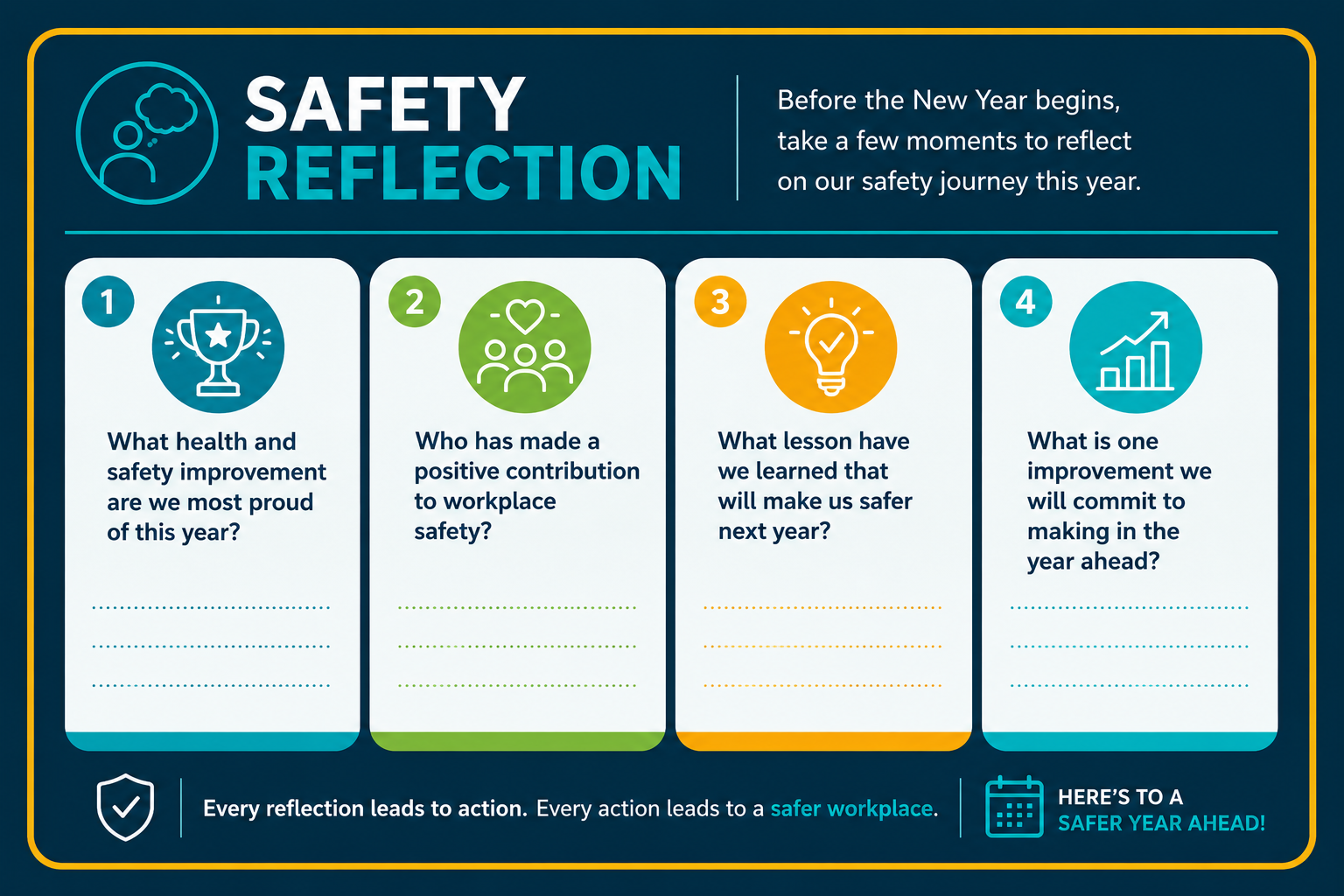
Safety successes – How has your organisation improved this year?
Take a moment to reflect on your achievements.
Have you:
- Introduced new PPE or equipment?
- Reduced workplace accidents or near misses?
- Improved housekeeping standards?
- Completed health and safety training?
- Updated risk assessments or safe systems of work?
- Improved hazard reporting?
- Invested in safer equipment?
- Enhanced employee wellbeing?
- Introduced new safety initiatives?
- Achieved a recognised health and safety accreditation?
Every improvement, no matter how small, contributes to a safer workplace.
Need more help?
Creating a positive safety culture doesn’t happen overnight, but recognising good practice and encouraging continuous improvement are excellent places to start.
The Health & Safety Portal provides practical guidance, templates and e-learning to help businesses strengthen their health and safety management systems, engage employees and build safer workplaces for the future.