











Published: September 2025
Reading time: 6 minutes
Suitable for: Anyone who drives for work
Topics: Driving for Work | Highway Code | Road Safety | Vulnerable Road Users
At a glance
The 2022 Highway Code changes introduced:
-
Parallel (“Tiger”) crossings for pedestrians and cyclists
-
Greater priority for pedestrians at junctions
-
Greater protection for cyclists when travelling straight ahead
-
Guidance on cyclists riding in the centre of the lane
-
Clarification that cyclists may ride two abreast
-
Updated guidance for cyclists using roundabouts
-
Greater protection for cyclists using cycle lanes
Why this matters
The Highway Code was updated in January 2022 to improve safety for pedestrians, cyclists and horse riders.
Although these changes have now been in place for several years, surveys continue to show that many motorists are still unfamiliar with some of the updated rules.
Whether you drive a company car, van, HGV or occasionally travel for work, understanding these changes helps protect everyone using the road.
Why were the rules changed?
The updated Highway Code introduced a stronger focus on protecting those who are most vulnerable.
This is known as the Hierarchy of Road Users.
The principle is simple:
Those operating larger or faster vehicles have a greater responsibility to reduce the danger they pose to others.
This doesn’t remove anyone’s responsibility to behave safely, but it encourages everyone to consider how their actions affect other road users.
Parallel (Tiger) Crossings
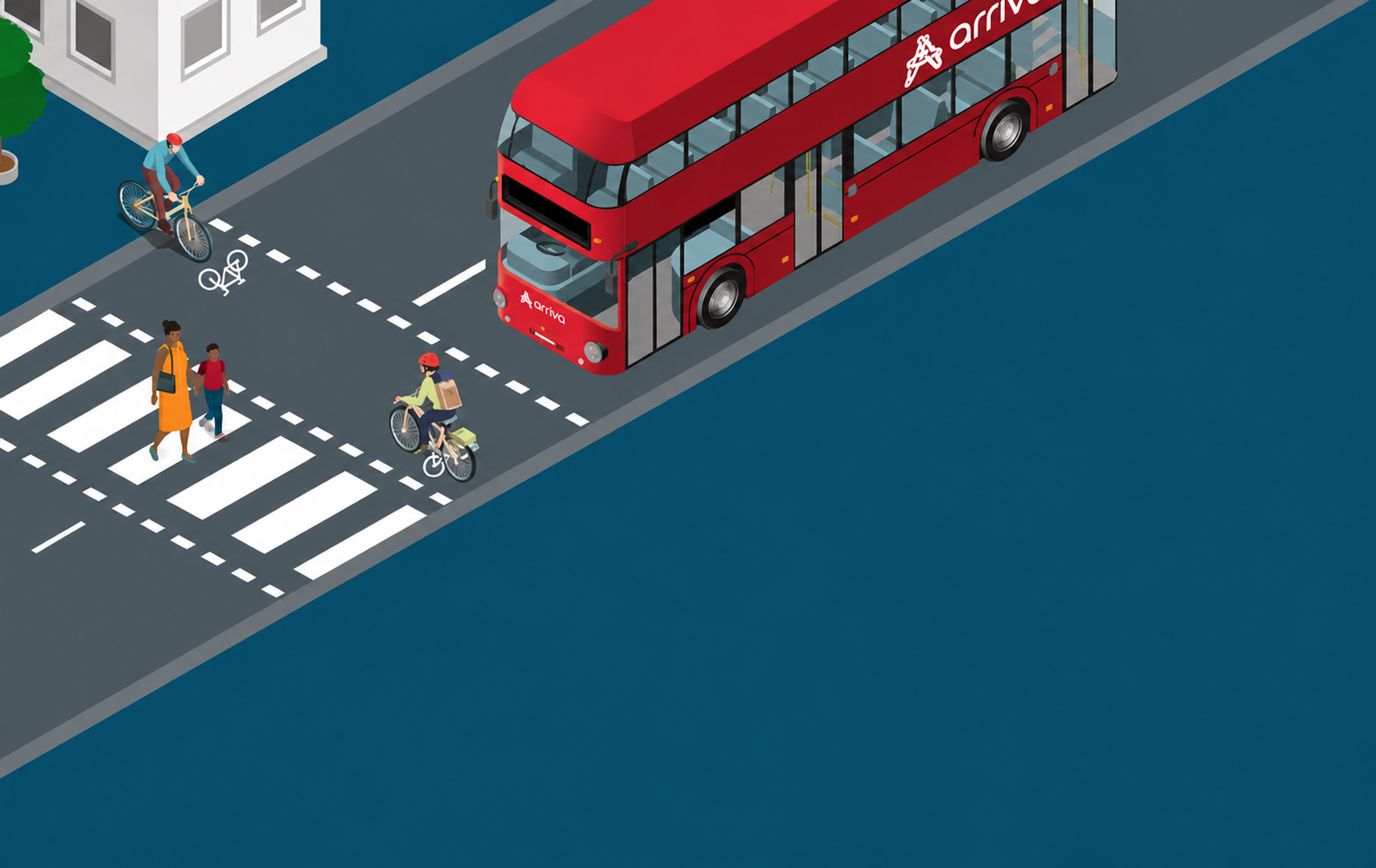
One of the most noticeable additions is the introduction of parallel crossings, sometimes called Tiger crossings.
Unlike a traditional zebra crossing, these crossings include a separate route for cyclists.
This allows:
- Pedestrians to cross using the zebra crossing
- Cyclists to cross using the adjacent cycle crossing without dismounting
Drivers must be prepared to give way to both pedestrians and cyclists using these crossings.
Giving way at junctions
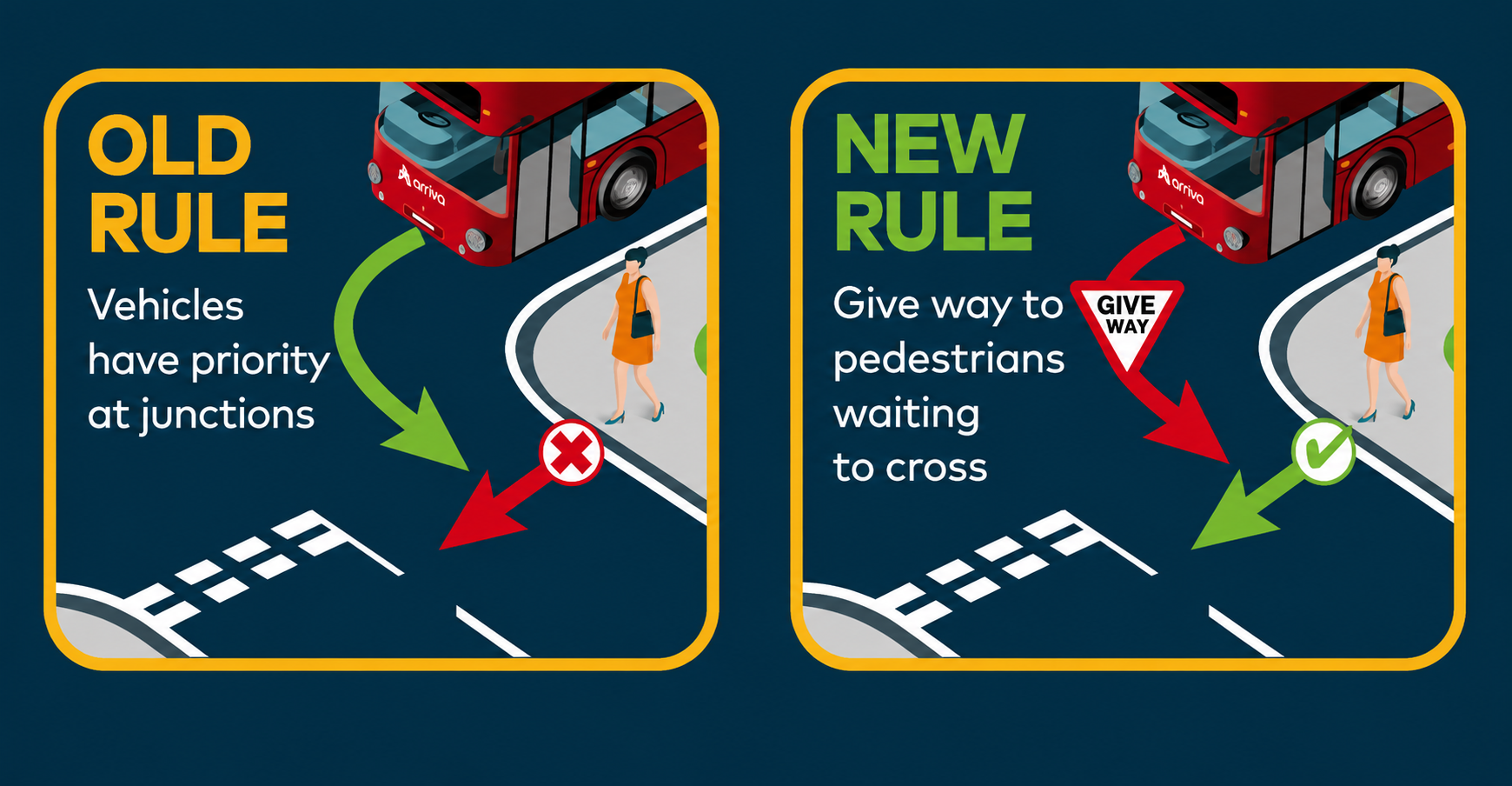
Another significant change affects pedestrians crossing side roads.
If a pedestrian has started crossing, or is waiting to cross a road into which or from which you are turning, you should give way.
This encourages safer interactions between vehicles and pedestrians at junctions where many collisions occur.
Cyclists at side roads
Drivers should also expect cyclists travelling straight ahead to have priority when they are crossing the entrance or exit of a side road.
This applies whether the cyclist is using the carriageway or a cycle lane.
Checking mirrors and blind spots before turning has never been more important.
Road positioning for cyclists
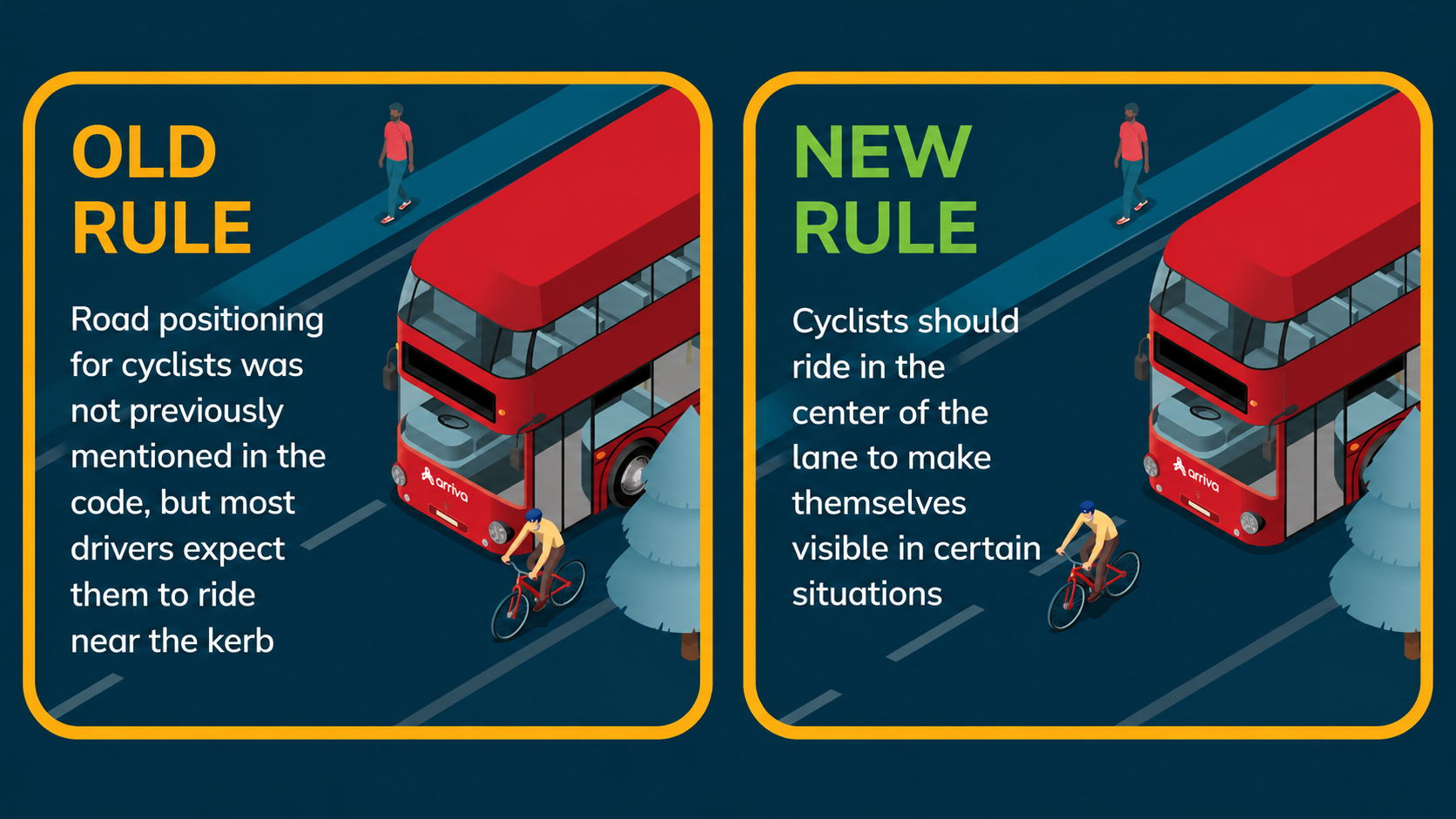
The updated guidance explains that cyclists should position themselves where they are most visible.
This may mean riding:
- In the centre of the lane on quieter roads
- In the centre when approaching junctions
- In the centre on narrow roads where overtaking would be unsafe
Some drivers may think the cyclist is deliberately blocking the road.
In reality, this position often makes them more visible and discourages unsafe overtaking.
Riding two abreast
Cyclists are permitted to ride two abreast in certain situations.
This can:
- Make groups easier to see
- Reduce the length of overtaking manoeuvres
- Improve safety on quieter roads
When traffic builds up, cyclists should be considerate of other road users and ride single file where appropriate.
Cyclists at roundabouts
The Highway Code also provides clearer guidance on how cyclists should position themselves at roundabouts.
Depending on where they are travelling, cyclists may use either the left or right lane and should be allowed sufficient space to complete their manoeuvre safely.
Drivers should avoid attempting to overtake cyclists on or immediately before a roundabout.
Cycle lanes
Where a cycle lane crosses the entrance or exit to a side road, drivers should give way to cyclists continuing along that lane.
Always check carefully before crossing a cycle lane, even if a cyclist is approaching from behind.
Many collisions happen because drivers focus only on other vehicles and fail to notice cyclists.
What does the law say?
Many of these changes updated the guidance within The Highway Code rather than introducing entirely new legislation.
However, the Highway Code supports existing road traffic laws and may be considered by the courts when determining whether someone has driven with reasonable care.
Anyone who drives for work should ensure they remain familiar with the latest edition of the Highway Code.
Need more help?
Driving is one of the most common work activities carried out by employees, yet it remains one of the highest-risk.
Keeping up to date with changes to the Highway Code helps reduce the likelihood of collisions and ensures your organisation continues to promote safe driving practices.